The Five Most Famous Lotteries in the World

To be lucky and win the lottery is not an exclusive aspiration of any nationality. Although, in the countries where there are special raffles for Christmas, good fortune is invoked with more or less success by millions.

Despite the tradition of each country, there are many lotteries around the world that distribute the biggest jackpots every day of the year. Let’s make a quick overview of the biggest prizes available out there!

1. The USA Powerball: The biggest lottery raffle!

An example is the Powerball lottery of the United States, the largest in the world. This is an American lottery game offered in 44 states, kbc lottery manager whatsapp number the District of Columbia, Puerto Rico and the US Virgin Islands.

The minimum Powerball jackpot is $ 40 million, and winners can choose between payment in 30 annuities or in cash, after deducting taxes and legal expenses.

In 2016, it sold a $ 1.6 billion ticket, the largest in the history of the US lotteries.

2. Mega Millions: At least 40 million!

Another example of a famous lottery is the Mega Millions, also from the United States, which began with its first steps in 1996 as The Big Game. Offered in 44 states, in addition to the District of Columbia, and the US Virgin Islands,

it is characterized by a minimum jackpot of $ 40 million that increases when you do not win, and has no limit.

2. A Mega jackpot of $491.7 million from Mega Millions

The actual jackpot was that of $1.537 billion, which would place it first in this list. However, some lotteries give the option of either taking a one-time payout (which would be less than the actual jackpot), or receive an annual

payment over a number of years which would amount to the full jackpot amount. The North Carolina winner chose the lump sum option of $491.7 million after tax, which still puts this jackpot high up in the list.

1. $768.4 million (Powerball)

What would you do if you won $768,400,000? A lucky Powerball winner from Wisconsin snatched the wonderful nine-digit number kbc lottery manager whatsapp number on the 27th March 2019. According to Powerball, the person had the same option as the Mega Millions winner above

– either a one-time $477 million payout or an annual payment of approximately $768.4 million over 29 years. Since the winner chose the full jackpot amount, they landed themselves top of this list!

So there you have it! 2019’s biggest jackpots around the world. As we close the 2019 chapter and start the 2020 one, we may all be asking the same question – who will take home the big numbers in 2020? We do not have psychic abilities,

but if you do, make sure not to spoil the surprise for the lottery winners of 2020!

Check out our top picks for online lottery agents here.

6. $60 million for a British Columbia winner

The winner of the $60,000,000 Lotto Max jackpot was Joseph Katalinic from Richmond, B.C., Canada. This was the largest lottery prize ever paid out to a single person in B.C., so Mr Katalinic must have been glad he participated in that

Lotto Max draw.

5. EuroMillions’ £71 million jackpot

EuroMillions are known for their great jackpots. From a factory worker to one of the biggest lottery winners in Britain, Ade Goodchild kbc lottery manager whatsapp number won £71,057,439 through EuroMillions. 2019 was definitely a life-changing year for the Hereford

resident.

4. Another EuroMillions jackpot – $170 million

Another EuroMillions prize! The marvellous sum of £170,221,000.00 was one of 2019’s biggest jackpots, and a single ticket-holder from the UK won the full amount – how amazing must that have felt?

3. A €209.1 million prize from SuperEnalotto

SuperEnalotto‘s mega jackpot of August 2019 is the largest jackpot paid out in Europe by any lottery. The lucky winner, who wanted to remain anonymous, won the massive €209,100,000.

Top 10 Global Lottery Winnings in 2020

It’s a new year, which means most of us will be looking back at the previous year, wondering where we would be if we had won the lottery.

2019 saw some massive jackpots being given out to lucky winners, so let us take a trip around the lottery globe and look at the top 10 lottery winners of 2019.

10. A €4 million prize was paid out in the Sorteo Extraordinario de Navidad (the Spanish Christmas Lottery)

Just like its name suggests, this lottery takes place every Christmas and there are a number of prizes given out. The main prize in 2019 was a wonderful €4,000,000 given out to what is known as El Gordo (The Fat One), i.e. the winning

number.

9. Irish Lotto gave out a jackpot of €11 million in August

€11,225,280 is the exact number, and it was kbc lottery manager whatsapp number claimed by just one lucky individual. Who knows how their life changed when they realised they were the sole winners of the Irish Lotto of the 21st of August 2019?

8. €31 million were won through the German Lotto

Saturday 29th June 2019 made one person very happy. Having tried their luck on the German Lotto, the sum of €31,482,812.60 made its way to an enthusiastic pocket.

7. An Australian lottery ‘s jackpot reached $40 million

This massive jackpot was snatched by a Western Sydney resident last year. Although the guy did not immediately realise that he was a winner, we’re sure that he was positively surprised when he checked his ticket!

Is Lottosend shutting down?

I’m afraid a long time online lottery brand, Lottosend, seems to be shutting down. Their supporting platforms – Affiliation for example – were taken down yesterday, April 1st, 2020. There was no notice on the site or by email of an

issue. This is a strong indication of the imminent shutdown of the lottery site.

Lottosend first launched in 2013 with the slogan – pick your numbers, we’ll do the rest – and they have for many years.

Since this is unconfirmed at this point, it’s hard to tell what might be the cause. I doubt COVID-19 (A.K.A Corona Virus) is to blame since kbc lottery manager whatsapp number people are spending more time in front of screens and lotteries are still going strong.

For the moment, I advise against opening new accounts and suggest players withdraw their funds, just in case they do close the operation.

You can have a look at the toplist of recommended lottery brands to play at and pick the one you like most.

gond painting

Source

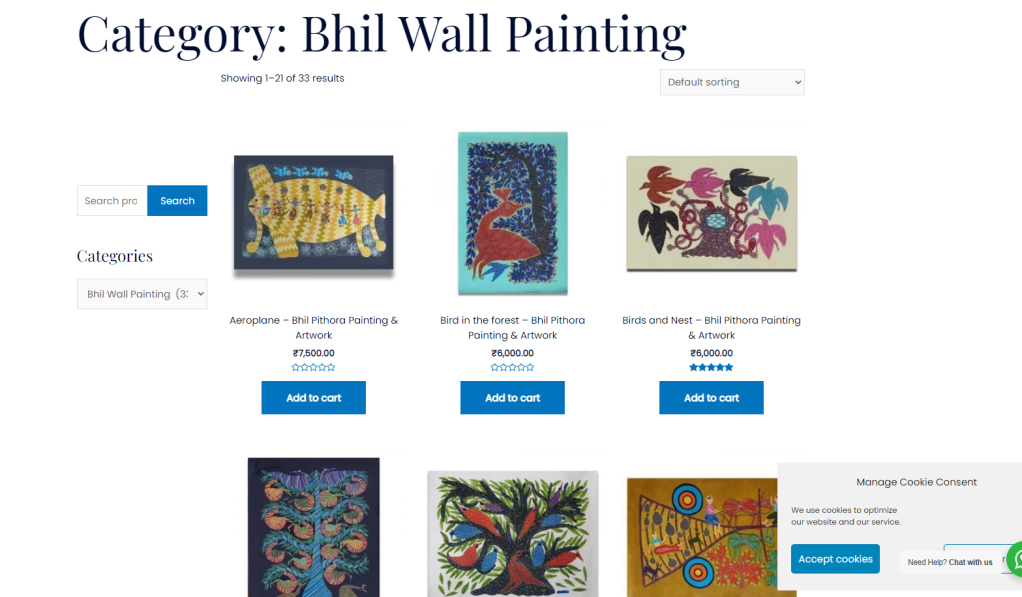
Bhils are the second largest tribal community of India. Bhil art is also given by them. Originating from the states of Madhya Pradesh, Rajasthan, Gujarat, Maharashtra. This art unveils the life of Bhils themself. This tribe used dots to depict life in vibrant colours. They try to connect their art and paintings with their Gods, Goddesses and nature. This includes carving of the Sun, Moon, nature, Gods, etc. from natural and herbal colours on walls or paper. One can easily understand the story behind the painting.

6. Gond

Source

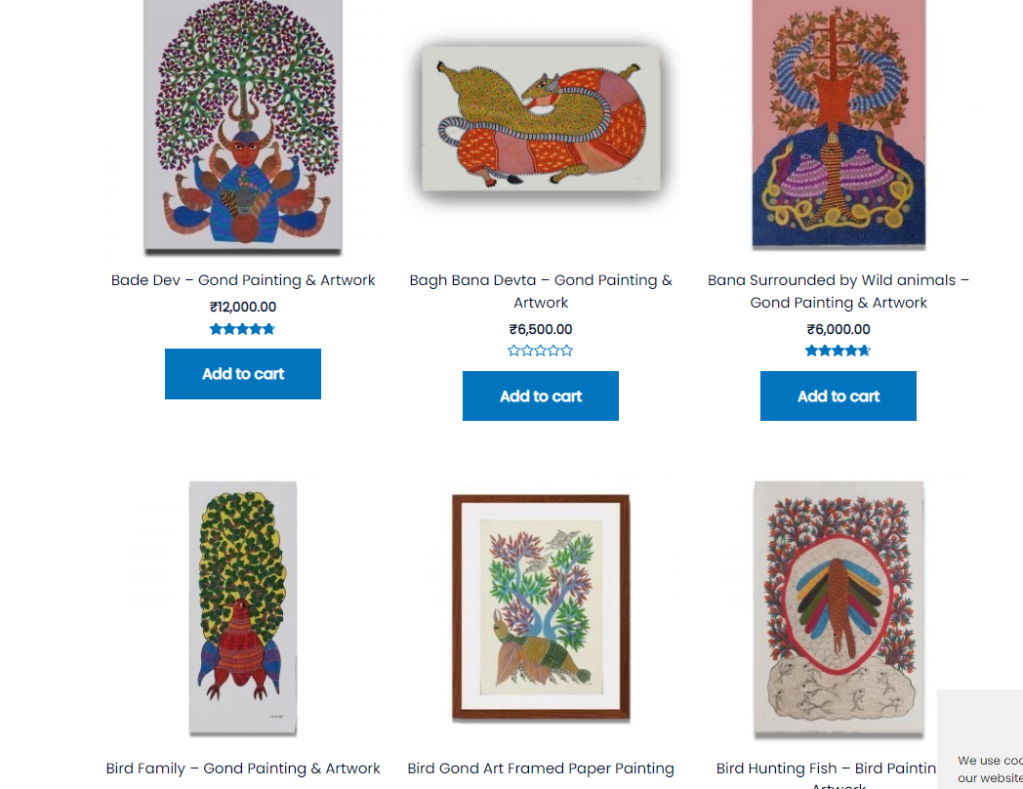
Originated from the state of Madhya Pradesh and nearby states, this art is carved on the mud walls. These paintings are rich in details, lines, colours, mystery and humour. These paintings are also drawn on paper, canvas, cloths etc. In these paintings, lines, dots and dashes are important features. This painting is drawn during major festivals such as Holi, Diwali, etc. These paintings are so good in quality that they can last for about 20 years even without any tampering.

7. Pattachitra Painting

Source

Pattachitra paintings are traditional paintings which originated from Odisha and West Bengal. It is a cloth-based painting which portrays Gods and Goddesses, made of sharp and fine lines in bold colours, floral designs in gond painting borders. In olden days, these paintings were used as story-telling. What makes this art different from others is the way clothes are depicted. These paintings are carved on “Patta” which means canvas. It is one of the oldest tribal art in India. It is said that an original Pattachitra painting is made from 100% natural colours and can take even months to complete.

8. Kalamezhuthu Art

Source

Kalamezhuthu art is a ritual art of God’s own country- Kerala. “Kalam” means picture and “ezhuthu” means drawing. This is a painting done on the floor and it can be seen during festivals and special occasions. It has its way of drawing. First, the sacred deity is created, during which various remedies are taken into consideration, such as, deity, natural pigment, dimensions, colour choice, etc. After this, he is worshipped and songs are sung in praise of him. Finally, the drawing is erased by dancing on it through ritual steps.

9. Khovar Art

Source

This traditional wall art is done in the harvest season. The word Kho or Koh means cave and Var means husband. This matriarchal art is done by the women of the house to decorate the wedding chambers of newlywed couples. Khovar art originated from Jharkhand. The backdrop is prepared by firstly applying a coat of black mud and then followed by applying a coat of white mud. After this, a tool is used to peel the coating and give the desired design. Usually, tribal people living in the forest carve animals like, Tiger, Snake, Peacock, etc. while those living on plains carve Cow, Goat, Pigeon, etc.  

10. Kavad or Kawad Art

Source

Kavad or Kawad art of Rajasthan is around 500 years old art which is practised by Jangid Brahmins of Chittorgarh. It is a three-dimensional box which has multiple panels that can be unfolded. It is a portable temple in which various Gods and Goddesses are painted. These panels are made of light wood and depict stories of epics like Ramayana, Puranas, Bhagavad Gita and many more.

It’s a matter of great pride that the Tribal Arts of India are still practised in many places and people have kept it alive today even after so many years.

India is home to more than 2500 tribes and ethnic groups . The rich diversity of these groups have contributed many art forms including folk and tribal art. Some of the famous tribal art forms of India are: Warli paintings, Bhil and Gond painting, Santhal painting, Madhubani Paintings of Bihar, Saora paintings of Odisha, and Pithoro paintings of Gujrat. These tribal art forms are very ethnic and simple. They are mainly practised by their tribe members and they bear distinctive colourful designs and often portray myths and legends of local heroes and their deities.

Warli Painting originates from the biggest clan on the northern edges of Bombay. Maharashtra is known for its Warli craftsmanship. These works of art are not a portrayal of fanciful characters or gods but rather delineate the public activity of the individuals. The work of art is attracted by spots utilizing ideally white shading. These works of art are holy and marriage couldn’t occur without them.

Patachitra or Pattachitra painting, as the name proposes is painting done on canvas. Patta implies canvas and Chitra mean work of art. It is the most established and most well-known type of craftsmanship rose up out of Bengal and Odisha. It is shown by rich vivid application, imaginative themes and plans, and depiction of straightforward subjects, for the most part fanciful in a portrayal.

Rajasthani Miniature Paintings came to India through the Mughals. These artistic creations are made with the most extreme consideration, every single moment detail is dealt with, it has lines, particulars and wonderful splendid hues set in an excellent example. Today, numerous specialists make scaled-down compositions on silk, ivory, cotton, and paper.

Kalamezhuthu is the drawing usually known rangoli, kolam which is drawn at the passage of the sanctuaries and homes. It is workmanship drilled at the floors and forests of the sanctuaries portraying the god in the sanctuary. In each painting, the examples the moment subtleties, measurements and shading decision are chosen in recognition with severe standards. The examples change extensively relying upon the event. [10]

India is home to more than 2500 tribes and ethnic groups . The rich diversity of these groups have contributed many art forms including folk and tribal art. Some of the famous tribal art forms of India are: Warli paintings, Bhil and Gond painting, Santhal painting, Madhubani Paintings of Bihar, Saora paintings of Odisha, and Pithoro paintings of Gujrat. These tribal art forms are very ethnic and simple. They are mainly practised by their tribe members and they bear distinctive colourful designs and often portray myths and legends of local heroes and their deities.

Warli Paintings

Warli paintings come from the Warlis tribe principally found in “Thane” district in the state of

Maharashtra. The theme

of Warli painting is not mythological but rather activities of daily life like hunting, harvesting, dancing and sowing.

Unlike other art forms, their colours are not so bright. They usually use

red, yellow and white as primary colours for their paintings. At its basic level, Warli Art is made of a circle, a triangle and a square. Owing to their lifestyle, their basic inspiration comes from the nature. Due to their linear nature and monochromatic hues, one can find a lot of similarity with the pre-historic cave paintings.
Posted on August 3, 2020

Is the cup half empty, or half full?

This was the one thought which kept flashing through my mind the day I came face-to-face with A. Ramachandran’s art.

One of India’s leading contemporary artists, when Ramachandran [b. 1935], a native of the South Indian state of Kerala and alumnus of Santiniketan started painting, the world he saw around him was a sad, painful one filled with conflict and anguish. It was post-1947 and India was reeling from the aftermath of the partition whilst the world at large still carried the wounds of World War II. Continue reading →

SHARE THIS:

Click to share on WhatsApp (Opens in new window)Click to share on Twitter (Opens in new window)Click to share on Pinterest (Opens in new window)Click to share on Facebook (Opens in new window)Click to share on LinkedIn (Opens in new window)Click to share on Reddit (Bhil painting)Click to print (Opens in new window)Click to email this to a friend (Opens in new window)Click to share on Tumblr (Opens in new window)Click to share on Pocket (Opens in new window)Click to share on Telegram (Opens in new window)Click to share on Skype (Opens in new window)

Posted in Art and Me | Tagged 1947, A Ramachandran, Anti-Sikh Riots, Bhil Tribe, Indian Contemporary Art, Paintings, Partition | 22 Replies

photo essay: in search of bundi’s prehistoric rock paintings

Posted on September 8, 2017

32

Destination, or the journey? In travel, it is often hard put to distinguish between the two.

When I went to Bundi in Rajasthan a fortnight ago, I had no clue that merely 30 kilometres south of the town were 101 sites of prehistoric rock art painted 15,000 years ago. They were discovered by a one Mr. Kukkiji in 1997, who was to take me to the sites himself. What I knew less of was the charms of the paintings’ backdrop—the caves lined tranquil wide rivers, on whose lush shores the Bhil, an Indian Adivasi tribal had made their homes. Continue reading →

SHARE THIS:

Click to share on WhatsApp (Opens in new window)Click to share on Twitter (Opens in new window)Click to share on Pinterest (Opens in new window)Click to share on Facebook (Opens in new window)Click to share on LinkedIn (Opens in new window)Click to share on Reddit (Opens in new window)Click to print (Opens in new window)Click to email this to a friend (Opens in new window)Click to share on Tumblr (Opens in new window)Click to share on Pocket (Opens in new window)Click to share on Telegram (Opens in new window)Click to share on Skype (Opens in new window)

Posted in Exploring India, Rajasthan | Tagged Adventure Travel, Bhil Tribe, Gararda, Kukkiji, Mesolithic Period in India, Prehistoric Art, Rabari Herders, Rajasthan, Rajasthan Tourism, Rock Paintings, Things to do in Bundi | 32 Replies

global travel shot: the prehistoric rock paintings of bundi

IMAGE

14

The image above is that of an antelope in a forest, next to a trap waiting to catapult it to its death. Nope. This is not somewhere in the interiors of France or Spain, more commonly associated with prehistoric art, or even in Bhimbetka where India’s prized rock art collection lies.

It is instead on the insides of a cave lining a tributary of the river Chambal in Gararda, Rajasthan, 35 kilometres from Bundi, my base a fortnight ago.

Painted 15,000 years ago in mineral colours, very few people know of it. Just a handful come from the far corners of the world to marvel at its beauty, and timelessness.

And if it were not for a local sweetmeat-shop-owner-turned-archaeologist, we would not know of it either. He discovered the site in 1997 and has passionately been creating awareness of it ever since, unearthing 101 caves festooned with prehistoric art to-date. His name is Kukkiji

Tribal Art

Indian online contemporary and folk art gallery Deccan Footprints was established in 2012 by Manvee Vaid with the aim of sharing the work of Indian contemporary and folk artists directly with the world, cutting out the need for physical gallery space. For Folk Ark’s purposes, Manvee’s collection of folk art works by Bhil, Gond, Madhubani, Patua and Warli people is of most interest, and is what you’ll see on Deccan Footprints’ profile page. From their website, some fascinating explanations of the locations and differing tribal traditions of these cultures are below. Welcome Deccan Footprints!

BHIL

Pithora Horses

Untitled

Untitled

The Bhils are the second largest tribal community of India residing in the states of Madhya Pradesh, Gujarat, Rajasthan and Maharashtra. Some of the Bhils trace their ancestry to Eklavya, who was more skilled as an archer than Arjuna, the hero of Mahabharata. Some scholars have said that Valmiki, who chronicled the Ramayana was actually a Bhil, Valia.

The rich cultural tradition of the Bhils are manifested in their rituals, their songs and dances, their community deities, tattoos, myths, community art and lore. Everything connected with the Bhil life is painted — the Sun, the Moon, the animals, trees, insects, rivers, fields, mythological figures, and their gods. The Bhils, like all adivasis, live close to nature.

GOND

View fullsizeTiger

View fullsizeHerd of Deer

View fullsizeMonkeys on a Tree

The Gonds are the largest Adivasi Community in India and are Dravidians whose origins can be traced to the pre-Aryan era. They are mainly found in Madhya Pradesh and its surrounding States. The word Gond comes from Kond, which means green mountains in the Dravidian idiom. The Gond called themselves Koi or Koiture.Their language is related to Telegu and other Dravidian languages. About half of Gonds speak Gondi languages, while the rest speak Indo-Aryan languages including Hindi.

The Gonds traditionally painted on mud walls of their houses. Starting in the early 1980s, certain talented Pardhan Gonds who traditionally serve as professional bardic priests began transforming their ritual performing arts into a new tradition of figurative and narrative visual art: using a variety of modern media (including acrylic paintings on canvas, ink drawings on paper, silkscreen prints, and animated film) they have created unprecedented depictions of their natural and mythological worlds, traditional songs and oral histories.

MADHUBANI

Madhubani, which literal translates into Forest of Honey, is a small village in northern Bihar.The origins of Madhubani (or Mithila) art are shrouded in antiquity. Tradition states that this art style dates back to mythology of the Ramayana, when King Janak commissioned artists to do paintings at the time of marriage of his daughter, Sita, to Lord Ram. However the contemporary art of Mithila painting was born in the early 1960’s, following the terrible famine in Bihar. It was Baskar Kulkarni from the All India Handicraft Board in Delhi who recognized the commercial potential of this folk art form and urged the villagers to also paint on handmade paper to supplement their meager income and alleviate the poverty of the region. Over the past fifty years a wide range of styles of Mithila art have evolved, with styles differentiated by region and caste. There are mainly three schools: Kayastha, Brahmin, and Tattoo.

Religion plays an important role in the lifestyle and tradition of the people of Bihar which is reflected in their paintings of Hindu Mythology. It is the Mithila women who have kept the culture alive especially in painting. Women do most Tribal Art of the Madhubani paintings and their creativity can be experienced in their desire to please their gods and to develop their spirituality.

Women of upper castes mainly do the wall paintings of the Kohbar Ghar, Gosain Ghar and the Aripan Floor paintings. The use of colors would differentiate each from their work. Brahmins use colors like pink, green, yellow, lemon, blue and black. Kayastha painting consist of just black and deep red. Ganga Devi, Mahasundari Devi, Sita Devi and Bani Devi are some of the prominent women artists.

PATUA

View fullsizeBengal Tigers

View fullsizeKalighat Cat

View fullsizeKrishna Leela

Patachitra scroll painting comes from the eastern part of India mainly from the state of West Bengal and Bihar. The Bengali scroll tradition is an ancient one, featuring single image paintings or long vertical multi paneled scrolls known as ‘patas’ (paintings) or ‘jorana patas’ (scroll paintings). Painted jorana patas of rural Bengal are one of the few genuine narrative pictorial forms of folk art linked with performance that have survived down to the present century.

In Bengali, “Pat” means “picture” and “Patua” or “Chitrakar” means “Painter”. The Patua is a kind of minstrel, religious preachers who employ these paintings as a means to propagate their religion. It was also an important device through which both oral and written epics are narrated. He goes from village to village, carrying these scrolls from door to door, and depending on people’s request, particular stories would be narrated for a small fee, either in cash or kind. The scrolls are done with sheets of paper sewn together and sometimes stuck on canvas. Their width can go from 4 to 14 inches and their length, often 3 feet, can exceed 15 feet. The subjects painted by the Patuas in West Bengal are extremely varied. Their audience is mainly Hindu or Muslim, sometimes Catholic. The themes are inspired by the sacred texts of each of these religions.They also speak about political subjects which are given to them by the local authorities like the regrouping of the lands or family planning.

WARLI

View fullsizeHarvesting Dates

View fullsizeVillage Life

View fullsizeCity Life

The Warli tribe settlements spread all over the Thane district of the state of Maharashtra. They are innate artists and their painting tradition is more than 1200 years old. The paintings on the walls of the their huts are traditionally done by the women of the tribe and are greatly influenced by the their surroundings and day to day life. These wall murals are done on red mud or cow dung layered walls and the figures are painted with a rice-flour mix, which could be washed off and re-painted every season. The traditional life of the Warli reflects their interaction, or more precisely, their co-existence with nature. The Warli believe that everything in this world interacts: the actions of humans and the harmony of space. The universal harmony is maintained by the implicit unique communication between humans and deities.

These extremely rudimentary wall paintings use a very basic graphic vocabulary: a circle, a triangle and a square. The circle and triangle come from their observation of nature, the circle representing the sun and the moon, the triangle derived from mountains and pointed trees. Only the square seems to obey a different logic and seems to be a human invention, indicating a sacred enclosure or a piece of land. Human and animal bodies are represented by two triangles joined at the tip; the upper triangle depicts the trunk and the lower triangle the pelvis. Their precarious equilibrium symbolizes the balance of the universe, and of the couple. These tribal art startle visually without the prop of color and with a remarkable economy of detail.

gond painting

The word “Gond” comes from the Dravidian expression kond, meaning “the green mountain.” The work of Gond artists is rooted in their folk tales and culture, and thus story-telling is a strong element of every painting.

The Gonds paint their walls with vibrant depictions of local flora, fauna and gods such as Marahi Devi and Phulvari Devi (Goddess Kali). Traditionally made on festive occasions such as Karwa Chauth, Diwali, Ashtami and Nag Panchmi, Gond painting depicts various celebrations, rituals and man’s relationship with nature. The artists use natural colors derived from charcoal, colored soil, plant sap, leaves, and cow dung. This mystical art form is created by putting together dots and lines. The imaginative use of the line imparts a sense of movement to the still images. The paintings are an offering in worship of nature, and are also a mode of seeking protection and warding off evil.

Subscribe

Get weekly updates on the latest blogs via newsletters right in your mailbox.

Full Name

Email Address

Country

No Spam. Cancel Anytime.

Today, many talented Gond artists’ works including Suresh Kumar Dhurve’s can be seen on canvases in art galleries internationally. One of the distinctive elements is the use of signature patterns that are used to infill the larger forms on the canvas. A certain sense of balance and symmetry can be observed in the pattern used, such as spiral forms along with trees, leaves, animals and human figures. Painted gond painting in several bright colors, the placement of motifs showcasing village life and the blending of human figures with rituals and nature depict the Gonds inherited skills and creativity. In the eyes of a Gond artist, everything is sacred and intimately connected to nature. Thus, the unique oral narrative tradition of the Gonds is reflected in their paintings as well. The work of Gond artists is rooted in their folk tales and culture, and thus story-telling is a strong element of every painting. However every artist today has a personal style and has developed a specific language within these narratives creating a richness of aesthetic forms and styles.

Bhil painting

Bhil Art – How A Tribe Uses Dots To Make Their Story Come Alive

ART WISE

June 05, 2017by Amorette Lyngwa

It is often said that to know the art form of a particular place, is to know the place itself. If that is true, then to look at Bhil Art, is to enter the Bhil painting house of the artists themselves; to experience firsthand, this intimate art form from Central India.

The Bhils are the second largest tribal community in India, residing in Madhya Pradesh, Gujarat, Maharashtra and Rajasthan. Some Bhils trace their ancestry to Eklavya, the archer from Mahabharata, while some scholars even believe that Valmiki, who authored Ramayana, was a Bhil.

Traditionally, the art of the Bhil folk would adorn the clay walls of their village homes. Beautiful images would be painted with neem sticks and other twigs, and natural dyes would be used. Turmeric, flour, vegetables, leaves and oil were used to derive brilliant colours to make fascinating frescoes on floors and walls, in a language created by the Bhils, to convey their experiences.

(A Bhil artist stands against an entire wall painted with Bhil motifs; Image Source – bhilart.com)

Of Dots and Colours

One look at a Bhil painting, and you’ll immediately begin to recognize it anywhere you see the art form. Bhil paintings usually consist of large, un-lifelike shapes of everyday characters filled in with earthy, yet bright colours, and then covered with an overlay of uniform dots in several patterns and colours that stand out strikingly against the background.

The dots on a Bhil painting are not random. They are patterns that could be made to represent anything that the artists wish to, from ancestors to deities. Because these patterns are solely in the hands of the artists who create them, the work of every Bhil artist is unique, and the dot patterns can be counted as the artist’s signature style.

Design a site like this with WordPress.com
Get started